
Ayurvedic Product Manufacturing
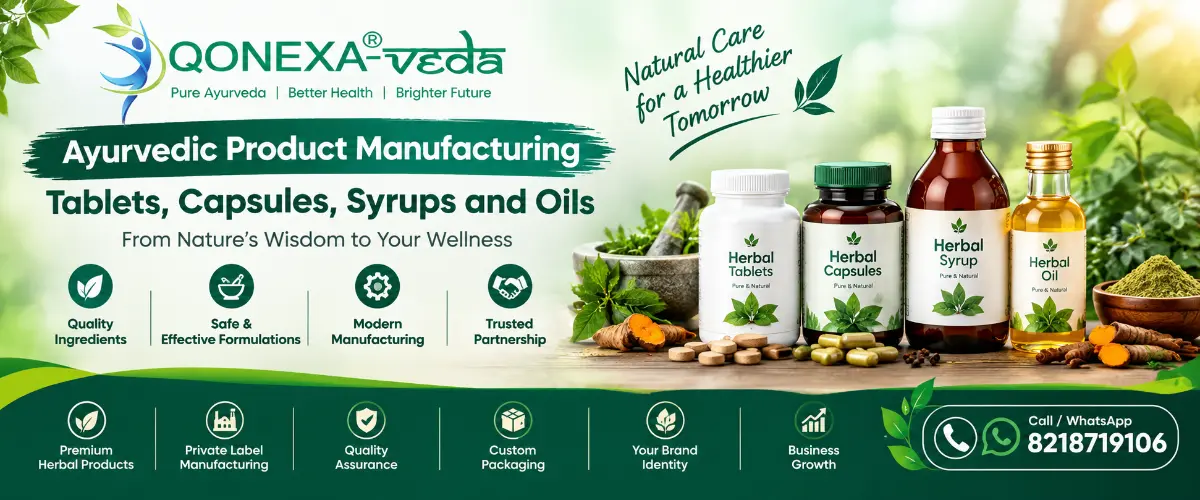
Ayurvedic Product Manufacturing: Tablets, Capsules, Syrups and Oils
Discover how Ayurvedic products are planned and manufactured across different dosage forms, including tablets, capsules, syrups and oils. Learn about product selection, manufacturing partnerships, quality procedures, packaging, documentation and business planning.
Table of Contents
- Introduction
- What Is Ayurvedic Product Manufacturing?
- Major Ayurvedic Product Forms
- Ayurvedic Tablets
- Ayurvedic Capsules
- Ayurvedic Syrups
- Ayurvedic Oils
- How to Select the Right Product Form
- Choosing a Manufacturing Partner
- Ayurvedic Manufacturing Process
- Quality and Manufacturing Controls
- Packaging and Labelling
- Private Label Manufacturing
- Third Party Manufacturing
- Cost Factors
- Marketing Strategy
- Common Mistakes
- Manufacturing Checklist
- Qonexa Veda
- FAQs
Introduction
Ayurvedic products are available in different dosage and product forms, depending on the intended product category, formulation and manufacturing requirements. Tablets, capsules, syrups and oils are among the formats that businesses may consider when developing an Ayurvedic product portfolio.
For entrepreneurs, selecting a product is only the beginning. A complete Ayurvedic Product Manufacturing strategy also involves understanding the manufacturing process, selecting an appropriate manufacturing partner, planning packaging, reviewing applicable requirements and developing a distribution strategy.
Whether you are an established distributor, a PCD franchise professional or an entrepreneur planning a new Ayurvedic brand, a structured manufacturing plan can help you make better business decisions.
What Is Ayurvedic Product Manufacturing?
Ayurvedic product manufacturing is the process of converting selected ingredients and approved formulations into finished Ayurvedic products through an organized production and quality-control system.
The process can include raw material sourcing, formulation planning, processing, manufacturing, quality checks, filling or compression, packaging, labelling, documentation and dispatch.
The exact process depends on the product form. A tablet, capsule, syrup and oil do not follow exactly the same manufacturing route.
| Product Form | General Manufacturing Consideration |
|---|---|
| Tablets | Powder or granule processing followed by suitable compression and finishing. |
| Capsules | Preparation of suitable fill material followed by capsule filling and packaging. |
| Syrups | Liquid preparation, processing, filling and suitable container packaging. |
| Oils | Preparation, processing, filtration where applicable and filling into suitable containers. |
Major Ayurvedic Product Forms
Different product formats can serve different business and customer requirements. Before selecting a product form, consider your target market, distribution channel, packaging preferences and manufacturing capabilities.
Tablets
A convenient solid dosage form that can be suitable for various Ayurvedic product categories.
Capsules
Capsules provide another convenient solid dosage format for suitable formulations.
Syrups
Liquid products can be developed for appropriate categories where a syrup format is suitable.
Oils
Ayurvedic oils can be manufactured and packaged in different suitable container formats depending on the product.
Ayurvedic Tablet Manufacturing
Tablets are one of the commonly recognized solid product formats. In Ayurvedic Product Manufacturing, tablet production generally requires appropriate preparation of the formulation before compression into the desired tablet format.
Product and Formulation Planning
The manufacturer first works with the finalized product requirements and applicable formulation specifications.
Raw Material Preparation
Suitable raw materials are processed according to the manufacturing requirements of the product.
Blending or Processing
The materials may undergo appropriate processing to achieve the required consistency before the tablet production stage.
Compression
The prepared material is compressed into the required tablet form using suitable production equipment.
Finishing and Inspection
Finished tablets can undergo appropriate inspection and quality checks before being transferred to the packaging stage.
Packaging
Tablets may be packed in suitable packaging formats according to product requirements and applicable specifications.
Ayurvedic Capsule Manufacturing
Capsules provide another solid dosage format that businesses may consider when developing an Ayurvedic product range.
The manufacturing process generally begins with preparation of the material to be filled into the capsules. The formulation must be suitable for the selected capsule format and manufacturing equipment.
Material Preparation
The ingredients and formulation are prepared according to the approved product requirements.
Capsule Filling
The prepared material is filled into suitable capsules using an appropriate production process.
Inspection
The finished capsules can be checked for appropriate production and quality parameters before packaging.
Packaging
Capsules can be packed into suitable containers or packaging formats according to the product requirements.
Ayurvedic Syrup Manufacturing
Syrups are liquid Ayurvedic products that require a manufacturing process different from solid dosage forms.
The exact process depends on the formulation and product specifications. Manufacturing may involve preparation of the liquid base, addition of ingredients, appropriate processing, quality checks and filling.
Liquid Preparation
The required ingredients are prepared and processed according to the finalized product requirements.
Mixing and Processing
Ingredients are processed using suitable equipment and procedures to achieve the required product characteristics.
Quality Checks
Appropriate checks are performed according to the product specifications and applicable quality procedures.
Filling
The finished liquid is transferred into suitable containers under appropriate manufacturing conditions.
Packaging
The filled containers are labelled and packed according to finalized packaging requirements.
Ayurvedic Oil Manufacturing
Ayurvedic oils are another important product category. They can be developed for appropriate Ayurvedic and herbal product applications depending on the formulation and intended use.
Ingredient Selection
The raw materials required for the product are selected according to the finalized formulation and applicable specifications.
Processing
The ingredients undergo the required manufacturing process under suitable conditions.
Filtration or Processing Steps
Where applicable, suitable processing or filtration steps can be used to prepare the finished product.
Filling and Packaging
The finished oil is filled into appropriate containers and prepared for labelling and dispatch.
For brands, container selection is particularly important because the packaging needs to be suitable for the product and practical for the intended distribution channel.
How to Select the Right Product Form
Choosing between tablets, capsules, syrups and oils should be part of your overall business strategy.
| Consideration | Question to Ask |
|---|---|
| Target Customer | Which format is appropriate for the intended customer group? |
| Product Category | Which dosage form is suitable for the planned product? |
| Packaging | What packaging format will work best for storage and distribution? |
| Manufacturing | Can the selected manufacturer support the required product format? |
| Inventory | What quantity can the business realistically manage? |
| Distribution | Which channels will be used to reach customers? |
| Brand Strategy | Does the product fit the identity and positioning of the brand? |
How to Choose an Ayurvedic Product Manufacturer
Selecting a suitable manufacturer is one of the most important parts of Ayurvedic Product Manufacturing. A manufacturing partner should be evaluated on more than just the quoted product price.
1. Manufacturing Capabilities
Check whether the manufacturer can support your required product forms, packaging formats and expected quantities.
2. Product Range
A broader product range can be useful if you intend to build a portfolio rather than launch only one product.
3. Quality Systems
Ask about the manufacturer's quality procedures, documentation and checks applicable to the products you are considering.
4. Packaging Support
Confirm whether the manufacturer can support your required packaging and labelling requirements.
5. Minimum Order Quantity
MOQ can have a significant impact on your initial inventory and working capital planning.
6. Communication
Clear communication is important for product specifications, artwork, production schedules and dispatch coordination.
7. Delivery Planning
Discuss expected production and dispatch timelines before committing to a market launch date.
Ayurvedic Product Manufacturing Process: Step by Step
Although the exact process differs between product categories, a typical manufacturing project can be organized into the following stages.
Requirement Planning
Define the product, quantity, dosage form, packaging and intended market.
Product Selection
Shortlist products that match your business strategy and target customers.
Manufacturer Evaluation
Compare manufacturing capabilities, quality procedures, commercial terms and product support.
Quotation and Commercial Discussion
Discuss product quantities, packaging, pricing, MOQ and other commercial requirements.
Product Finalization
Finalize the product specifications and manufacturing requirements.
Artwork and Packaging
Prepare and review the product label, packaging artwork and other required brand materials.
Documentation
Complete the documentation applicable to the product and manufacturing arrangement.
Production
The manufacturer produces the product according to finalized specifications and applicable procedures.
Quality Checks
Appropriate checks are performed according to the product's specifications and quality procedures.
Packaging and Dispatch
Finished products are packed and prepared for delivery according to the confirmed order and logistics arrangements.
Quality Control in Ayurvedic Product Manufacturing
Quality is a critical part of any manufacturing business. For an Ayurvedic brand, consistency can influence customer experience and long-term brand trust.
Raw Material Control
Appropriate raw material controls help maintain consistency in the manufacturing process.
Production Controls
Manufacturing should follow suitable procedures for the selected product category.
Finished Product Checks
Finished products should undergo the checks applicable to their product category and specifications.
Packaging Inspection
Packaging should be reviewed to help identify errors in labels, quantities, product information and other applicable details.
Documentation
Maintaining appropriate records can support manufacturing consistency and business coordination.
Packaging and Labelling for Ayurvedic Products
Packaging is not simply a design element. It also plays an important role in product presentation, handling, storage and customer communication.
Tablets and Capsules
Suitable containers, strips, bottles or other formats may be selected based on the product and packaging requirements.
Syrups
Liquid products require containers suitable for the product and intended distribution conditions.
Oils
Oil products require suitable bottles or containers that support appropriate storage and handling.
Artwork Review
Before printing, carefully review the product name, quantity, manufacturer information, contact details and all other applicable label information.
Private Label Ayurvedic Product Manufacturing
Private label manufacturing allows a business to market suitable manufactured products under its own brand, subject to the agreed manufacturing arrangement and applicable requirements.
This approach can be useful for entrepreneurs who want to concentrate on branding, sales and distribution without establishing a complete manufacturing facility themselves.
Businesses considering this model can also read the detailed guide on Private Label Ayurvedic Manufacturing .
Ayurvedic Third Party Manufacturing
Third party manufacturing is another business model in which a company outsources the production of selected products to a manufacturing partner.
The business can focus on product selection, branding, sales, distribution and customer development while production is handled through the agreed manufacturing arrangement.
Learn more about the Ayurvedic Third Party Manufacturing Process for a detailed step-by-step overview.
Factors That Affect Ayurvedic Product Manufacturing Cost
There is no single fixed cost for manufacturing Ayurvedic products. Production costs can vary depending on several factors.
Product Type
Tablets, capsules, syrups and oils can have different manufacturing requirements.
Quantity
Order quantity can influence manufacturing economics and inventory planning.
Packaging
Bottle, box, label, printing and other packaging choices can affect total cost.
Product Specifications
Specific product requirements can influence manufacturing and packaging expenses.
Other costs may include logistics, branding, marketing, storage, distribution and general business operations. Therefore, entrepreneurs should calculate the complete business cost rather than looking only at the manufacturing quotation.
Marketing Your Ayurvedic Product Range
Manufacturing high-quality products is only one part of building a successful business. Customers must also be able to discover and understand your brand.
Website and SEO
Build individual product pages and educational content around relevant keywords. Search-friendly content can help potential customers discover your brand.
Social Media
Use suitable social media platforms to showcase products, packaging, brand identity and educational content.
Distributor Network
Develop suitable relationships with distributors, retailers and other business partners where relevant to your business model.
Educational Content
Useful articles, FAQs and product information can help customers understand your product categories.
Offline Marketing
Brochures, catalogues, business meetings and appropriate industry networking can complement digital marketing activities.
Businesses can also explore Ayurvedic PCD Pharma Franchise opportunities when developing a distribution-oriented business strategy.
Common Mistakes to Avoid
Choosing Only on Price
The lowest quotation may not always provide the best overall business fit. Evaluate manufacturing capabilities, quality systems, communication and commercial terms together.
Ordering Too Much Inventory
Large initial inventory can create cash-flow and storage challenges. Plan quantities according to your realistic market strategy.
Ignoring Packaging
Poor packaging can negatively affect product presentation. Give packaging appropriate attention while also reviewing applicable label requirements.
No Target Market
Launching products without understanding who will buy them can make marketing difficult.
Weak Digital Presence
A professional website and relevant online content can help customers discover your brand and understand your products.
Unsupported Marketing Claims
Avoid exaggerated or unsupported health claims. Review marketing content against the requirements applicable to your products and market.
Ayurvedic Product Manufacturing Checklist
- Define your target market.
- Select the product category.
- Choose suitable product forms.
- Shortlist products.
- Evaluate manufacturers.
- Discuss MOQ and pricing.
- Review manufacturing capabilities.
- Finalize product specifications.
- Confirm packaging requirements.
- Prepare artwork.
- Review applicable documentation.
- Confirm quality procedures.
- Finalize production schedule.
- Plan logistics and dispatch.
- Prepare website product pages.
- Create marketing materials.
- Develop distribution channels.
- Track customer response.
Qonexa Veda for Ayurvedic Product Manufacturing
Qonexa Veda provides Ayurvedic manufacturing solutions for businesses looking to develop and market Ayurvedic products. Depending on your business requirements, you can discuss suitable product categories, manufacturing options, packaging and business requirements with the team.
Whether you are planning tablets, capsules, syrups, oils or another suitable Ayurvedic product format, selecting the right manufacturing partner is an important part of your business planning process.
You can also explore additional information and business resources through Qonexa.in .
Planning Your Ayurvedic Product Range?
Discuss your product requirements, manufacturing needs, packaging preferences and business plans with Qonexa Veda.
📞 Call: 8218719106 💬 WhatsApp: 8218719106Final Thoughts
Ayurvedic Product Manufacturing involves much more than simply producing a finished product. Businesses need to consider product selection, dosage form, manufacturing capabilities, quality procedures, packaging, documentation, pricing, distribution and marketing.
Tablets, capsules, syrups and oils each have different manufacturing considerations. Choosing the right format should therefore be based on the product, target market and overall business strategy.
A well-planned manufacturing partnership can help entrepreneurs develop a structured product portfolio while allowing them to focus on branding, sales, distribution and customer relationships.
Frequently Asked Questions
Ayurvedic Product Manufacturing is the process of producing Ayurvedic products through suitable formulation, processing, manufacturing, quality checking, packaging and dispatch procedures.
Depending on the manufacturer's capabilities and applicable requirements, Ayurvedic products may be available in formats such as tablets, capsules, syrups, oils and other suitable product forms.
Tablet manufacturing generally involves preparation and processing of the formulation, suitable compression, inspection or quality checks and packaging. The exact process depends on the product.
Capsule manufacturing generally involves preparation of the filling material, capsule filling, appropriate checks and packaging according to the finalized product requirements.
Third party manufacturing may be available for suitable Ayurvedic syrup products depending on the manufacturer's capabilities and applicable requirements.
Businesses may explore private label or third party manufacturing options for suitable Ayurvedic oils, subject to product specifications, manufacturing capabilities and applicable requirements.
Consider product range, manufacturing capabilities, quality procedures, documentation, packaging support, MOQ, communication, pricing and delivery planning.
Cost can vary according to product type, quantity, formulation requirements, packaging, printing, logistics and other business expenses.
Private label manufacturing can be considered by businesses that want to market suitable manufactured products under their own brand without establishing their own complete production facility.
You can contact Qonexa Veda by calling or WhatsApp at 8218719106 to discuss Ayurvedic product manufacturing requirements.