
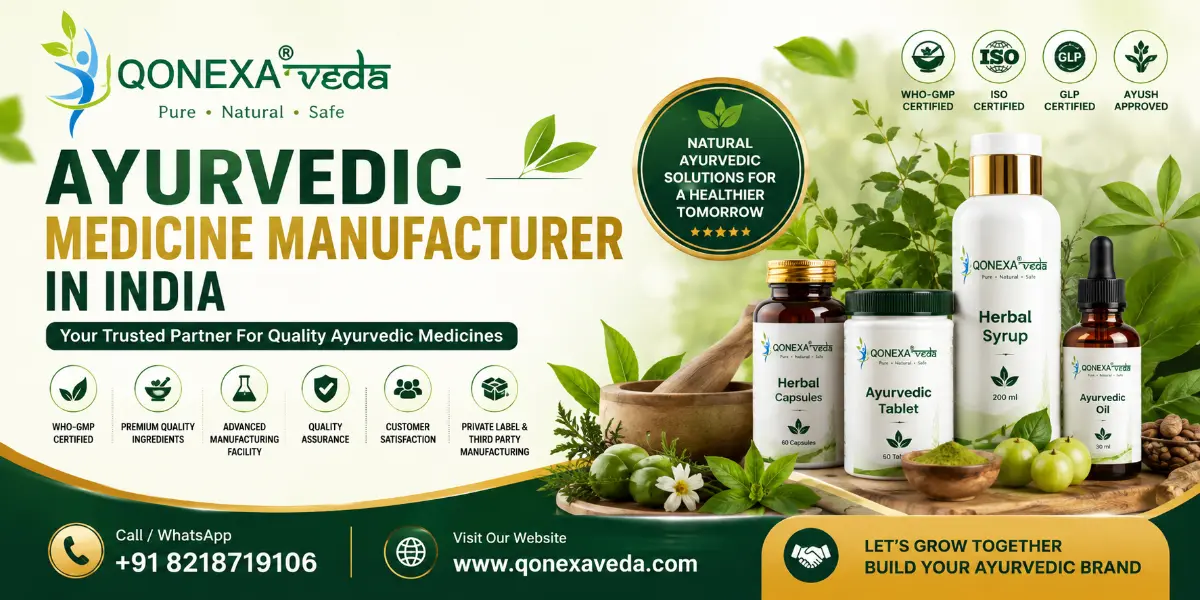
Ayurvedic Medicine Manufacturer in India – Complete Guide for Growing Healthcare Brands
A practical and detailed guide for entrepreneurs, healthcare businesses, startups, distributors and brands planning to develop, manufacture and market quality-focused Ayurvedic products in India.
The Indian Ayurvedic and herbal healthcare market has created significant opportunities for entrepreneurs who want to build their own product portfolio or expand an existing healthcare business. However, launching a successful product range requires more than simply selecting a product and placing a brand name on a package. Businesses need a reliable manufacturing partner, suitable formulations, quality-focused processes, appropriate packaging, documentation and a clear commercial strategy.
Choosing the right Ayurvedic Medicine Manufacturer in India can therefore become one of the most important decisions for a new or established healthcare brand. A capable manufacturing partner can help convert a business idea into a practical product range while supporting manufacturing, packaging and product development requirements.
🌿 What You Will Learn in This Guide
- How Ayurvedic manufacturing works
- How to evaluate a manufacturing partner
- Important product development considerations
- Private label and third-party manufacturing options
- Packaging and branding considerations
- Quality and documentation factors
- How startups can build an Ayurvedic product range
- Common mistakes businesses should avoid
Understanding Ayurvedic Medicine Manufacturing
Ayurvedic medicine manufacturing is a specialized business process that involves converting suitable raw materials, formulations and product concepts into finished Ayurvedic products. The process can include formulation selection, raw material procurement, manufacturing, quality checks, filling, packaging, labeling and dispatch depending on the agreement between the brand and manufacturer.
For businesses, manufacturing is not only about producing a physical product. It is also about creating consistency. A brand needs products that can be manufactured repeatedly with an appropriate quality approach and suitable documentation. This is particularly important when a company plans to distribute products through multiple cities or develop a long-term franchise network.
An experienced Ayurvedic Medicine Manufacturer in India can support different business models depending on the company's requirements. Some entrepreneurs may want finished products for distribution, while others may want products developed and packed under their own brand identity.
Why Choosing the Right Manufacturing Partner Matters
The manufacturing partner you select can influence product consistency, delivery planning, packaging quality and the overall efficiency of your business operation. A poor manufacturing decision may result in communication gaps, unexpected delays, inconsistent documentation or difficulty scaling the product range.
A good manufacturing relationship should be based on clear communication and realistic expectations. Before placing an order, business owners should understand the product specifications, quantity, packaging, labeling, commercial terms and expected delivery timeline.
Manufacturing Capability
Review whether the manufacturer has suitable capabilities for the product categories you want to develop.
Quality Approach
Understand how raw materials, production processes and finished products are handled within the agreed manufacturing process.
Packaging Options
A professional packaging system helps create a consistent brand presentation across your product portfolio.
Types of Ayurvedic Manufacturing Services
Not every business requires the same manufacturing model. A startup launching its first product may need a different solution from an established distributor expanding into a new category.
1. Third-Party Manufacturing
In third-party manufacturing, a business works with a manufacturing company to produce agreed products. The manufacturing partner handles the manufacturing side while the client manages the commercial and brand-related requirements according to their arrangement.
This model can be useful for entrepreneurs who want to enter the Ayurvedic market without developing an entire manufacturing facility themselves.
2. Private Label Manufacturing
Private label manufacturing allows a business to market products under its own brand identity. Depending on the project, the manufacturer may support product selection, formulation options, packaging and other production-related requirements.
For startups, this model can make it easier to create a professional product portfolio while focusing internal resources on marketing, distribution and customer acquisition.
3. Contract Manufacturing
Contract manufacturing involves a more defined manufacturing relationship between a business and a production partner. The exact scope can vary according to product specifications, manufacturing requirements, packaging and commercial arrangements.
How to Select the Right Ayurvedic Manufacturer
Selecting a manufacturing partner should be approached as a structured business decision rather than simply comparing prices. A lower quoted price may not always represent the best overall value if communication, packaging, documentation or delivery planning does not meet your requirements.
When evaluating an Ayurvedic Medicine Manufacturer in India, start by preparing a clear requirement sheet. Mention your desired product category, approximate quantity, preferred dosage form, packaging concept, target market and expected timeline.
Check the Product Categories
First determine whether the manufacturer works with the product forms you need. Depending on the facility and applicable requirements, this could include tablets, capsules, syrups, powders, oils and other herbal or Ayurvedic product categories.
Review Manufacturing Capabilities
Manufacturing capability is an important consideration when you plan to scale. A partner that can support multiple product formats may provide greater flexibility as your portfolio grows.
Understand Documentation
Documentation should be discussed before production. Businesses should understand which documents are applicable to their products and what information will be required for manufacturing, packaging and distribution.
Discuss Packaging Requirements
Packaging is an important part of brand development. Bottles, cartons, labels, jars and other formats should be selected according to the product, brand positioning, customer expectations and applicable requirements.
Important Factors Before Starting Product Manufacturing
Before approaching a manufacturing company, prepare a basic product brief. This helps the manufacturer understand what you want and also reduces unnecessary back-and-forth during discussions.
| Requirement | What to Decide |
|---|---|
| Product Category | Tablet, capsule, syrup, powder, oil or another suitable format |
| Brand Name | Your proposed brand identity and product naming strategy |
| Quantity | Initial requirement and potential future volume |
| Packaging | Bottle, carton, jar, pouch or other suitable format |
| Label Information | Required product and business information according to applicable rules |
| Target Market | Local, regional, national or franchise-based distribution |
| Delivery Planning | Expected manufacturing and dispatch timeline |
Product Development and Formulation Considerations
Product development is one of the most important stages of creating an Ayurvedic brand. Businesses should not select products only because they appear popular. Instead, they should consider the target customer, market positioning, product category, competition and long-term brand strategy.
A good product portfolio should have a logical structure. For example, a company may begin with a focused selection of products and gradually expand based on market feedback and distribution opportunities.
When working with a manufacturer, discuss whether you require existing formulations, customized product development or private label options. The appropriate route will depend on your business model and the manufacturer's capabilities.
💡 Build a Focused Product Portfolio
Instead of launching too many products immediately, new brands can consider starting with a manageable portfolio. This allows them to focus on packaging, marketing, distribution and customer feedback before expanding into additional categories.
Manufacturing Process: From Concept to Finished Product
Although exact procedures vary by product and facility, an Ayurvedic manufacturing project generally follows a sequence of planning, production and packaging activities.
Requirement
Define product, quantity and brand requirements.
Product Planning
Finalize suitable product and manufacturing specifications.
Production
Manufacturing is carried out according to the agreed process.
Packaging
Products are packed and prepared for dispatch.
Step 1 – Understanding the Requirement
The first stage is communication. The business explains what it wants to manufacture, who the intended customers are and what kind of packaging and commercial positioning it has in mind.
Step 2 – Product Selection
The next stage is identifying suitable products and formats. Depending on the project, the manufacturer can discuss available options and manufacturing possibilities.
Step 3 – Manufacturing
Once specifications and commercial requirements are finalized, manufacturing can proceed according to the agreed production plan.
Step 4 – Packaging and Dispatch
After manufacturing, products go through the agreed packing and labeling process before dispatch. Delivery planning should be discussed in advance to ensure smoother inventory management.
Private Label Ayurvedic Brand Development
Private labeling is increasingly attractive to entrepreneurs who want to build a differentiated healthcare brand. Instead of investing in a complete manufacturing infrastructure, the business can work with a manufacturing partner and focus more heavily on brand identity, distribution and marketing.
The success of a private label business depends on several factors. Product selection, packaging design, positioning, pricing, distribution and customer trust all play a role.
Businesses should also make sure that their product labels and marketing materials are prepared according to applicable requirements. Claims should be reviewed carefully, particularly where products are related to health and wellness.
Packaging and Branding for Ayurvedic Products
Packaging is often the first physical interaction a customer has with a product. A clean, professional and consistent design can help create a stronger brand impression.
Brand Consistency
Use consistent fonts, design language, colors and visual elements across the portfolio. A consistent identity makes it easier for customers to recognize your brand.
Product Information
The packaging should communicate the required product information clearly and professionally. Avoid overcrowding the design with unnecessary promotional text.
Practical Packaging
Packaging should also be practical for transportation, storage and customer handling. Product-specific considerations should be discussed with the manufacturer and packaging team.
Quality-Focused Manufacturing and Business Confidence
Quality should remain central to any healthcare product business. Entrepreneurs should understand the manufacturer's quality systems, production practices and documentation relevant to the products they plan to manufacture.
A reliable manufacturing relationship also depends on transparency. Businesses should receive clear information about product specifications, commercial terms, packaging and expected timelines.
For this reason, selecting an Ayurvedic Medicine Manufacturer in India should involve evaluating the overall manufacturing relationship rather than selecting a company solely on the basis of the lowest quotation.
Benefits of Working With a Professional Manufacturing Partner
Lower Infrastructure Burden
Businesses can avoid the need to build their own complete manufacturing setup when a suitable third-party or private-label model meets their requirements.
Faster Brand Development
A structured manufacturing relationship can simplify the transition from product idea to commercial product.
Scalable Portfolio
Businesses can gradually expand their product portfolio as distribution and customer demand develop.
Another advantage is the ability to concentrate on the areas where the business has the strongest capabilities. A brand owner may focus on sales, distribution, digital marketing and customer relationships while the manufacturing partner handles agreed production responsibilities.
Ayurvedic Manufacturing for Startups
Startups often have limited resources and therefore need to make careful decisions regarding inventory, packaging and product selection. Starting with a focused range can be more practical than launching a very large portfolio immediately.
A startup should prepare a realistic budget that considers product manufacturing, packaging, design, logistics, marketing and working capital. Manufacturing cost is only one part of the overall business investment.
It is also useful to develop a clear sales strategy before finalizing products. Consider whether you will sell through distributors, retailers, online channels, franchise partners or a combination of channels.
How to Build a Strong Ayurvedic Product Portfolio
A strong portfolio should have a clear purpose. Products should not be selected randomly. Think about how each product fits into the broader brand strategy.
- Select products that match your target customer segment.
- Maintain a consistent brand identity across the portfolio.
- Choose packaging that supports professional market positioning.
- Plan inventory according to realistic sales expectations.
- Keep documentation and product information organized.
- Use customer and market feedback to guide future expansion.
The goal should be to create a sustainable product business rather than simply launch as many products as possible.
Common Mistakes to Avoid When Choosing a Manufacturer
Choosing Only on Price
Price is important, but it should not be the only deciding factor. Manufacturing capability, quality approach, packaging, communication and delivery planning should also be considered.
Launching Too Many Products
A very large product portfolio can increase inventory complexity and marketing requirements. Start with products that fit your strategy.
Ignoring Packaging
Packaging plays an important role in customer perception. A weak package design can make even a good product look less professional.
Not Discussing Requirements Clearly
Ambiguous product specifications can create delays and confusion. Prepare a written requirement sheet before placing the order.
Making Unsupported Product Claims
Healthcare and wellness marketing should be handled responsibly. Businesses should ensure that product communication and claims follow applicable requirements.
Why Qonexa Veda Can Be Considered for Your Manufacturing Requirement
Qonexa Veda focuses on Ayurvedic and herbal product solutions for businesses looking to develop and grow their healthcare product portfolio. Depending on the requirement, businesses can discuss manufacturing, private-label and product development possibilities.
The right manufacturing solution should always be selected according to your product category, target market, quantity, packaging requirements and business model. Qonexa Veda can help businesses understand available options and plan their product requirements accordingly.
If you are comparing manufacturing partners, prepare your requirement first and then discuss the exact product specifications, packaging, quantity and commercial expectations with the manufacturer.
🌿 Build Your Ayurvedic Brand With a Structured Approach
A successful Ayurvedic brand is built through a combination of suitable products, reliable manufacturing, professional packaging, consistent branding, responsible marketing and strong distribution.
Questions to Ask Before Finalizing an Ayurvedic Manufacturer
- Which product categories can you manufacture?
- What manufacturing and packaging options are available?
- What quantity is suitable for the initial order?
- What documents are required before production?
- What packaging formats can be supported?
- How is product information finalized?
- What is the expected production timeline?
- How will dispatch and delivery be managed?
- Can the product range be expanded later?
- Who will be the primary contact for project coordination?
Asking these questions early can make the manufacturing process more transparent and help both parties understand expectations.
Cost Considerations in Ayurvedic Manufacturing
Manufacturing cost depends on multiple variables. Product formulation, raw materials, dosage form, quantity, packaging, label design, carton requirements, printing and logistics can all influence the final commercial structure.
Therefore, businesses should avoid expecting a universal manufacturing price. Instead, provide a detailed requirement and request a quotation based on the actual product specifications.
For startups, it is especially important to consider total business cost rather than manufacturing cost alone. Marketing, inventory, transportation, sales team expenses and working capital may also need to be planned.
Future Growth Opportunities in Ayurvedic Healthcare
The growing interest in herbal and traditional wellness products has created opportunities for businesses that can develop strong brands with responsible product positioning.
However, long-term growth depends on customer trust, product consistency, distribution and business execution. Manufacturing is the foundation, but it is only one part of the complete business model.
Brands that invest in clear communication, professional packaging, customer service and consistent distribution can create stronger relationships with their customers and business partners.
Final Checklist Before Starting Your Manufacturing Project
| Step | Action |
|---|---|
| 1 | Define your target customer and business model |
| 2 | Select the initial product categories |
| 3 | Prepare product and packaging requirements |
| 4 | Compare suitable manufacturing partners |
| 5 | Discuss documentation and applicable requirements |
| 6 | Finalize product specifications |
| 7 | Finalize packaging and branding |
| 8 | Plan production and delivery |
| 9 | Prepare your marketing and distribution strategy |
| 10 | Monitor customer response and plan future products |
Conclusion
Selecting the right manufacturing partner is an important step for businesses entering or expanding within the Ayurvedic healthcare market. A well-planned manufacturing project should consider product requirements, manufacturing capabilities, packaging, documentation, quality processes, inventory and long-term business objectives.
Whether you are a startup, distributor, healthcare entrepreneur or established brand, a structured approach can help you make better manufacturing decisions. Instead of focusing on a single factor such as price, evaluate the complete partnership and its ability to support your business as it grows.
For businesses looking for an Ayurvedic Medicine Manufacturer in India, the most important step is to clearly define your requirements and discuss them with a suitable manufacturing partner. This can help create a smoother path from product concept to finished product.
Qonexa Veda can be approached for discussions related to Ayurvedic and herbal product manufacturing, private-label requirements and product development. Every project can be evaluated according to its specific product, packaging, quantity and business requirements.
Ready to Discuss Your Ayurvedic Product Requirement?
Whether you want to launch your own Ayurvedic brand, develop a private label product range or explore manufacturing possibilities, speak with the Qonexa Veda team and discuss your requirements.
Frequently Asked Questions
What does an Ayurvedic medicine manufacturer do?
An Ayurvedic medicine manufacturer develops and manufactures Ayurvedic and herbal products according to applicable quality, documentation, packaging and manufacturing requirements. Depending on the business model, services may include formulation support, manufacturing, private labeling, packaging and product development.
How do I choose an Ayurvedic manufacturing partner?
Businesses should evaluate manufacturing capabilities, product categories, quality systems, documentation, packaging options, minimum order requirements, communication, delivery processes and the manufacturer's ability to support their specific product requirements.
Can I launch my own Ayurvedic brand?
Yes. Businesses can work with suitable manufacturing and private-label partners to develop a product range under their own brand, subject to applicable product, labeling, regulatory and documentation requirements.
What is private label Ayurvedic manufacturing?
Private label Ayurvedic manufacturing allows a business to market Ayurvedic products under its own brand name while a manufacturing partner handles agreed manufacturing and packaging activities.
What products can an Ayurvedic manufacturer make?
Product availability depends on the manufacturer's capabilities and applicable requirements. Depending on the facility and business model, product categories may include tablets, capsules, syrups, powders, oils, herbal formulations and other Ayurvedic or wellness products.
How can I contact Qonexa Veda for manufacturing requirements?
You can contact Qonexa Veda by calling or sending a WhatsApp message on +91 8218719106 to discuss your Ayurvedic manufacturing, private-label or product requirements.